
SIGNATURE EXPERIENCE
Birdwatching & Photography in Morocco
Every Marvels of Morocco trip is private and fully customizable. This itinerary is a starting point — we’ll shape it around your dates, pace, and interests.
Our private Morocco birdwatching photography circuit through wetlands, the Atlantic coast, High Atlas valleys, and desert oases, timed for light and species, with a specialist guide and real time to observe.
BEST SEASON
September to April
HABITATS
Wetland, Coast, Mountain, Desert
FOCUS
Birding & Photography
GROUP SIZE
2-18 People
Built Around Light, Habitat, and Patience
Morocco packs an unusual range of habitats into a single, compact country, which is exactly what makes it one of the most rewarding birding destinations in North Africa. A coastal lagoon, a river mouth, a mountain valley, and a desert oasis can all realistically sit on the same itinerary, each hosting a different set of species. Most standard Morocco tours pass through some of these places without stopping long enough to actually use them, driving on before the light or the birds cooperate.
This experience is built the other way around. The itinerary is designed by habitat and season first, with early starts timed to when birds are most active, unhurried time at each site rather than a quick photo stop, and a driver-guide who understands both the birdlife and the practical needs of photographers, positioning, light, and patience. It is a private trip for two to six people, not a bus tour, and it can be run as a standalone birding and photography circuit or woven into a longer private Morocco tour.
A Circuit Built for Habitat Diversity
Atlantic Wetlands and Lagoons
The trip typically opens at Merja Zerga, one of the largest coastal lagoons in Morocco, a critical stopover for migratory waterbirds. Flamingos, spoonbills, and the elusive marsh owl are regular here, alongside marsh harriers and, at the right time of year, the occasional Eleonora’s falcon hunting over the reeds. Mornings on the lagoon, when the light is low and the water is still, are usually the most productive part of the visit, both for observation and for photography.
The Souss-Massa Coast
Further south, the Souss-Massa National Park and the mouth of the Oued Massa river form one of the most important birding sites in the country. This stretch of coast is the single best place in Morocco, and one of the best in the world, to see the critically endangered northern bald ibis, alongside strong numbers of waders such as avocet and black-winged stilt, and raptors including Bonelli’s eagle and the Barbary falcon. Time here is spent moving slowly along the estuary and the coastal scrub rather than covering ground quickly.
The High Atlas Valleys
A shift in elevation brings a completely different set of species. In the valleys around Asni and Imlil in the Western High Atlas, patient observation can turn up the highly sought-after white-rumped swift and Levaillant’s woodpecker, along with large flocks of red-billed and alpine chough wheeling around the cliffs. The Moussier’s redstart, a strikingly patterned bird endemic to North Africa, and the crimson-winged finch, found only at altitude, are two of the specialties that draw photographers to this stretch of mountains specifically.
Desert Oases and the Sahara Fringe
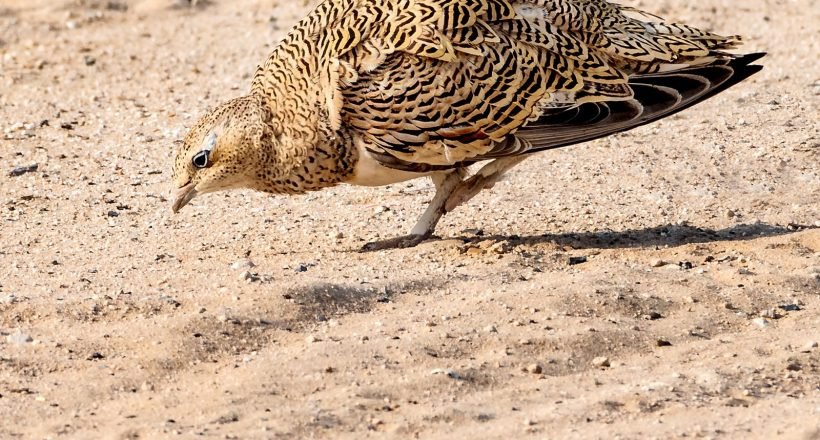
The circuit finishes in the pre-Saharan south, where date-palm oases and open hammada support a very different community again, larks, wheatears, and sandgrouse adapted to arid conditions, along with raptors drawn to the oasis edges. This is also where the trip connects naturally with the wider desert landscape, giving photographers a chance to work with genuinely different light and terrain from the wetlands and mountains earlier in the itinerary.
Designed for Photographers, Not Just Sightings
A checklist tick and a usable photograph require very different things from an itinerary. Standard tours are built around the first; this one is built around both. Departures are timed around first and last light rather than convenient breakfast hours, since that is when both bird activity and light quality are at their best. Vehicles are positioned to work as informal hides where useful, and stops are held for as long as the situation genuinely warrants rather than moving on to stay on schedule.
Your guide carries local knowledge of specific perches, flight paths, and feeding patterns built up over years in each location, the kind of detail that turns a distant sighting into a real photographic opportunity. Pace throughout is unhurried by design: fewer locations, covered properly, rather than a long list of sites seen briefly.
Trip Highlights
- Flamingos and marsh owls at the Merja Zerga coastal lagoon
- The critically endangered northern bald ibis at Souss-Massa
- Endemic mountain species in the High Atlas valleys around Imlil
- Desert specialists including larks, wheatears and sandgrouse
- Early starts and unhurried stops timed for light and activity
- A private vehicle used as an informal photography hide
- A specialist driver-guide with deep local site knowledge
What’s Included
- Private vehicle used as an informal photography hide
- Specialist driver-guide with local site knowledge
- All park and reserve entrance fees
- Accommodation in riads or lodges near key sites
- Daily breakfast
- Airport or city transfers at the start and end
What’s Not Included
- International flights
- Lunches and dinners
- Travel insurance
- Camera and photography equipment
- Personal expenses and souvenirs
- Tips for your guide
Good to Know Before You Go
- The best window is September to April, when migratory species are present and temperatures are comfortable for early starts.
- Expect early mornings. The best light and bird activity both happen shortly after sunrise, so departures are often before breakfast.
- A telephoto lens (300mm or longer) is recommended for serious bird photography, though the trip is equally suited to birders traveling without cameras.
- This is a low-impact physical trip, mostly short walks and time spent standing or sitting quietly, suitable for a wide range of fitness levels.
- This experience pairs well with a standalone focus or as an add-on to one of our multi-day Morocco tours.
Frequently Asked Questions
START PLANNING
Ready to Photograph Morocco’s Birdlife?
Tell us your dates, interests, and experience level, and we’ll design a private birdwatching and photography circuit around Morocco’s best habitats.
What Our Travelers Say
“He accompanied us throughout the tour, telling us many anecdotes about each place and many curiosities of the place, making us live a truly authentic experience.”
“Our driver, Mohamed was simply the best! He was exceptionally kind, professional, and polite, not to mention a safe and highly skilled driver — just an all-around wonderful person.”