
MULTI-DAY MOROCCO TOUR
13 Days Morocco Explorer
Every Marvels of Morocco trip is private and fully customizable. This itinerary is a starting point — we’ll shape it around your dates, pace, and interests.
A private 13-day Morocco tour from Tangier to Casablanca, covering Chefchaouen, Fes, the Sahara Desert, Marrakech, the Ourika Valley and Essaouira.
DURATION
13 Days / 12 Nights
ROUTE
Tangier to Casablanca (Full Explorer)
GROUP SIZE
2-16 People
TYPE
Private Multi-Day Tour
Tour Overview
Designed for travelers who want real depth on their trip, this 13-day private tour is our most complete exploration of Morocco, running from Tangier in the north to Casablanca on the coast, by way of Chefchaouen, Fes, the Sahara Desert, Marrakech, the Ourika Valley, and Essaouira.
Traveling in a private vehicle with your own driver-guide, this itinerary combines our Morocco Desert Tours route with the north, the Atlas foothills, and the Atlantic coast, making it one of our most comprehensive Morocco multi day tours for travelers with two weeks to explore.
Tour Highlights
- Explore Tangier’s medina and Kasbah overlooking the Strait of Gibraltar
- Wander the blue streets of Chefchaouen
- Discover Fes el Bali, the world’s largest car-free urban area
- Camel trek and two nights in a desert camp in the Sahara at Merzouga
- Walk through the dramatic Todra Gorges
- Visit the UNESCO-listed kasbah of Ait Ben Haddou
- Explore Marrakech’s medina, palaces and souks
- Day trip to the green Ourika Valley and Atlas foothills
- Relax on the Atlantic coast in Essaouira
- Visit the Hassan II Mosque in Casablanca
Day-by-Day Itinerary
DAY 01
Day 1: Arrival in Tangier
Your driver-guide meets you at Tangier Ibn Battouta Airport and transfers you into the city, perched on the Strait of Gibraltar where the Atlantic Ocean meets the Mediterranean Sea and Europe sits visibly just fourteen kilometres away across the water. Tangier functioned as an international zone jointly administered by multiple foreign powers for much of the early twentieth century, which drew writers, artists, and diplomats and left the city with a cosmopolitan character still visible today.
Settling into your riad in the Kasbah or medina, you have the afternoon free to get your first taste of Morocco at a relaxed pace. A short walk to the Kasbah Museum, housed in a former sultan’s palace, offers context on the city’s layered past, while nearby terraces give sweeping views across the strait toward Spain on a clear day.
In the evening, wander the medina’s narrow lanes or relax over a mint tea at one of the historic cafés once frequented by figures like Paul Bowles and William Burroughs, absorbing the particular literary atmosphere that has defined Tangier for generations.
DAY 02
Day 2: Tangier to Chefchaouen
Before leaving Tangier, your guide can include a short morning visit to the Caves of Hercules, a dramatic sea cave along the coast whose ocean-facing opening is famously shaped like a map of Africa. From here, the drive turns inland and climbs into the Rif Mountains toward Chefchaouen.
Chefchaouen, founded in 1471 as a small Andalusian and Rif Berber fortress town, is instantly recognizable for the cobalt-blue walls that wash its entire medina. Arriving in the early afternoon, you have time to explore the town’s cobbled lanes, the central Plaza Uta el-Hammam, and the small Kasbah museum at your own pace.
An evening walk up toward the Spanish Mosque on a hillside above town rewards you with sweeping views over the blue rooftops at sunset, a memorable introduction to one of Morocco’s most photogenic towns.
DAY 03
Day 3: Chefchaouen to Fes via Volubilis & Meknes
Leaving the Rif Mountains, you travel south toward Meknes, the smallest of Morocco’s four imperial cities, built up dramatically in the seventeenth century by Sultan Moulay Ismail. You visit the monumental Bab Mansour gate and the sultan’s vast former granaries and stables.
Just outside Meknes lie the Roman ruins of Volubilis, once the westernmost outpost of the Roman Empire in Africa, where remarkably preserved mosaics still cover the floors of former merchants’ villas alongside a standing triumphal arch.
From Volubilis, it is a short drive to Fes, where you settle into a riad within or near the medina walls, with a full day of guided exploration to follow tomorrow.
DAY 04
Day 4: Fes Guided City Tour
Fes el Bali, founded in the ninth century, is considered the best-preserved medieval city in the Arab world and remains the largest car-free urban area on earth, its estimated 9,000 alleyways navigable only on foot or by donkey. Your guide is essential here, leading you confidently through this labyrinth to landmarks that would be nearly impossible to locate independently.
You will visit the Al-Qarawiyyin Mosque and University, founded in 859 and recognized as the oldest continuously operating institution of higher learning in the world, along with the Bou Inania Madrasa, a fourteenth-century Quranic school celebrated for its cedar carving and zellige tilework.
No visit to Fes is complete without the Chouara Tannery, where leather has been dyed by hand in stone vats since the eleventh century, before the afternoon continues through the souks, where metalworkers and weavers each occupy their own historic quarter.
DAY 05
Day 5: Fes to the Sahara Desert via the Middle Atlas
Today’s drive takes you from Fes across the Middle Atlas Mountains, through Ifrane, a town built in a distinctly European alpine style during the French Protectorate era, and continuing south through Azrou and Midelt as the landscape shifts from cedar woodland to drier pre-Saharan terrain.
The route follows the Ziz Valley, where a ribbon of date palm oasis winds through a stark, rocky landscape below the Ziz Gorges. By late afternoon you reach Merzouga on the edge of the Erg Chebbi dune sea, where you exchange your vehicle for a camel and set off into the dunes with a local Berber guide.
You spend the night at a private desert camp in traditional Berber-style tents, with a campfire dinner and traditional drumming under a sky renowned for stargazing — the first of two nights beneath it.
DAY 06
Day 6: A Full Day in the Sahara Desert
Rather than moving on after a single night, this itinerary builds in a full day to settle into the rhythm of the dunes. After a relaxed breakfast at camp, head out by 4×4 to visit a semi-nomadic Berber family living at the desert’s edge, and learn how daily life is shaped around water and the seasons in one of Morocco’s most extreme landscapes.
Spend the warmest hours of the afternoon back at camp — resting in the shade, trying your hand at sandboarding on the nearby dunes, or simply taking in the silence that makes the Sahara so different from anywhere else on this trip.
As the light turns golden in the late afternoon, climb a dune for a second sunset over Erg Chebbi before returning to camp for another Berber dinner and an evening of music around the fire, under the same exceptionally clear sky for stargazing.
DAY 07
Day 7: Sahara Sunrise, Todra Gorges & the Dades Valley
On your final morning in the desert, many guests once more rise before dawn to climb a nearby dune and watch the sunrise over the Sahara, as first light turns the dunes from deep rose to gold. After breakfast at camp, you ride back to Merzouga and reunite with your driver.
The route heads west toward the Todra Gorges, where sheer limestone walls rise as high as 300 metres above a narrow river bed, one of Morocco’s most dramatic natural sites and a popular destination for rock climbers worldwide.
You continue into the Dades Valley, often called the Valley of a Thousand Kasbahs, where you overnight in a kasbah-style guesthouse as the surrounding cliffs glow deep orange at sunset.
DAY 08
Day 8: Dades Valley to Ait Ben Haddou & Marrakech
Continuing west, the road passes through Ouarzazate, Morocco’s film-industry hub, before reaching Ait Ben Haddou, a fortified ksar that has guarded the caravan route between the Sahara and Marrakech since at least the eleventh century. A UNESCO World Heritage Site, its cinematic silhouette has made it a filming location for Lawrence of Arabia, Gladiator, and Game of Thrones.
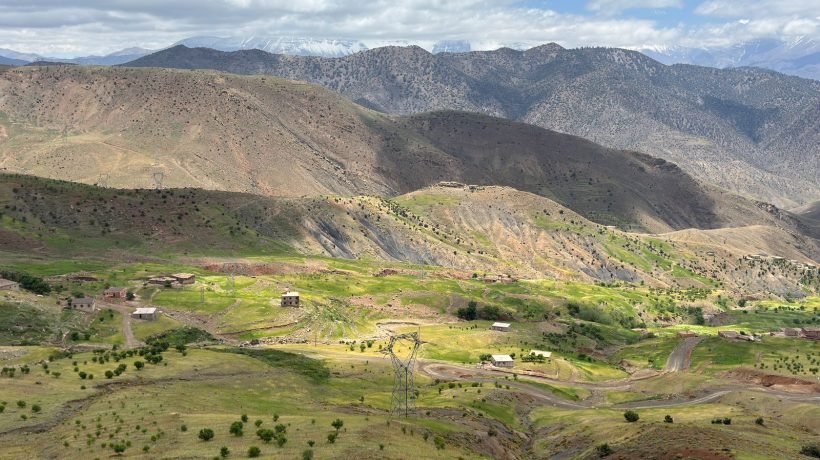
From Ait Ben Haddou, you begin the crossing of the High Atlas Mountains via the Tizi n’Tichka pass, climbing to over 2,200 metres through Berber villages and terraced orchards.
You descend into Marrakech in the late afternoon, with the evening free to rest before a full guided day in the city tomorrow.
DAY 09
Day 9: Marrakech Guided City Tour
A full day is dedicated to exploring Marrakech, beginning at the Koutoubia Mosque, whose twelfth-century minaret became the architectural template for the Giralda in Seville and the Hassan Tower in Rabat. From there you continue to the Bahia Palace and the Saadian Tombs, a royal necropolis rediscovered in 1917 after being sealed for centuries.
Many itineraries also include the Majorelle Garden, a striking cobalt-blue garden estate restored by fashion designer Yves Saint Laurent.
The afternoon leads into the souks before finishing at Jemaa el-Fnaa as it transforms after dark into an open-air spectacle of food stalls, musicians, and storytellers, a UNESCO-recognized tradition unlike anywhere else in Morocco.
DAY 10
Day 10: Ourika Valley Day Trip from Marrakech
Today is a lighter-paced day trip into the Ourika Valley, a green, fertile valley in the foothills of the High Atlas roughly an hour from Marrakech. The valley follows the Ourika River through a string of Berber villages, terraced gardens, and walnut orchards, offering a very different landscape from the desert and mountain passes seen earlier in the trip.
A moderate walk to the Setti Fatma waterfalls, a series of seven cascades reached via a rocky trail, is a popular highlight, with small cafés along the route serving tea and tagine with valley views.
You return to Marrakech in the late afternoon, with the evening free to revisit the souks or simply relax before continuing toward the coast tomorrow.
DAY 11
Day 11: Marrakech to Essaouira, the Atlantic Wind City
Today the tour shifts entirely in character, trading the mountains for Morocco’s Atlantic coast. The drive to Essaouira takes roughly two and a half hours through argan tree forests unique to this part of Morocco, where you may see local goats climbing into the branches to feed.
Essaouira is a UNESCO World Heritage fortified port city, built in its current form in the eighteenth century by the French military architect Théodore Cornut. The result is a distinctive whitewashed medina with blue shutters, ringed by sea-facing ramparts.
On arrival, your guide leads a walking tour through the medina, the working fishing port, and the Skala de la Ville ramparts, before you settle in for the evening in this relaxed Atlantic town.
DAY 12
Day 12: Essaouira to Casablanca
Leaving Essaouira, you travel north along the coast toward Casablanca, Morocco’s largest city and economic capital, known for its Art Deco architecture and modern, cosmopolitan character quite different from the historic medinas visited earlier in the trip.
Depending on timing and your energy levels, your guide can include a stop along the way or head fairly directly, arriving in Casablanca in the afternoon or early evening. You settle into your final hotel, with the Hassan II Mosque still to come on your last morning.
This final overnight is a good moment to reflect on the full scope of the journey, from Tangier and Chefchaouen in the north to the Sahara Desert, Marrakech, and the Atlantic coast.
DAY 13
Day 13: Casablanca & Departure
On your final morning, you visit the Hassan II Mosque, one of the largest mosques in the world and the only one in Morocco open to non-Muslim visitors on a guided tour. Built on a promontory over the Atlantic and completed in 1993, it features a 210-metre minaret and hand-carved cedar, marble, and zellige tilework produced by thousands of Moroccan artisans, a fitting final landmark after thirteen days immersed in the country’s craftsmanship.
Depending on your flight time, your guide can also walk you along the Corniche, Casablanca’s seafront promenade, for one last look at the Atlantic before departure.
Your driver transfers you to Mohammed V International Airport in good time for your onward flight, concluding a complete, thirteen-day exploration of Morocco’s north, desert, imperial cities, mountains, and coast.
What’s Included
- 12 nights accommodation (riads and kasbah-style guesthouses)
- 2 nights in a private Sahara Desert camp
- Private transportation in an air-conditioned vehicle
- Professional English-speaking driver-guide throughout
- Camel trek in the Erg Chebbi dunes
- Guided tours of Tangier, Chefchaouen, Fes, Marrakech, Essaouira and Casablanca
- Ourika Valley day trip with waterfall walk
- Entrance to Volubilis archaeological site
- Daily breakfast
- All accommodation taxes and fees
What’s Not Included
- International flights
- Lunches and dinners (except at the desert camp)
- Entrance fees to monuments not listed above
- Travel insurance
- Personal expenses and souvenirs
- Tips for your driver-guide and camp staff
Good to Know Before You Go
- This is a private tour, so your start date, pace, and overnight stops can be tailored to your preferences.
- Comfortable walking shoes are essential for the medinas and the Setti Fatma waterfall walk in the Ourika Valley.
- Desert nights can be cold even in summer, so pack a warm layer for the evening camel trek and campfire at the Sahara camp.
- For more on the route, see our Morocco Desert Tours and other multi-day Morocco tours.
- This is our most complete itinerary and can be shortened if you have less time available.
Frequently Asked Questions
START PLANNING
Ready to Explore All of Morocco?
Get in touch with our team to check availability, customize your route, and start planning your 13-day Morocco Explorer tour.
What Our Travelers Say
“He accompanied us throughout the tour, telling us many anecdotes about each place and many curiosities of the place, making us live a truly authentic experience.”
“Our driver, Mohamed was simply the best! He was exceptionally kind, professional, and polite, not to mention a safe and highly skilled driver — just an all-around wonderful person.”