
DESTINATIONS
Marrakech Travel Guide
Everything you need to plan a trip to Marrakech — the medina and souks, the best neighborhoods to stay in, top things to do, day trips, food, and practical tips from a local team.
Why Marrakech Is Usually Where a Morocco Trip Begins
Marrakech is Morocco’s most-visited city, and for most travelers, it is the natural starting point for a wider trip. It has the country’s best international flight connections, its most developed riad and restaurant scene, and a medina dense enough with sights, souks, and food to fill three or four days on its own, before you ever head toward the Atlas Mountains or the Sahara. It is also, for many first-time visitors, a genuine sensory adjustment — louder, busier, and more insistent than most Western cities — and knowing what to expect in advance makes a real difference to how much you enjoy those first days.
This guide covers the city as it actually is to visit: where to base yourself, what the medina and souks are really like, the sights worth prioritizing, how to get outside the city for a day, and the practical details — food, safety, and logistics — that make the difference between a stressful first 48 hours and a smooth one.
The Medina & Souks
Marrakech’s medina is a UNESCO World Heritage old town, a dense tangle of narrow streets built with no visitor in mind, which is exactly what makes it worth exploring. Jemaa el-Fnaa, the huge central square, is the medina’s anchor and its most famous sight, a genuinely different place by the hour: a relatively quiet market square by mid-morning, filled with orange juice stalls and snake charmers by afternoon, and a full sensory spectacle by evening, with dozens of food stalls, storytellers, and musicians filling the square after dark.
The souks fan out north from the square, loosely organized by trade — leather in one quarter, metalwork and lanterns in another, textiles and babouche slippers in another — though the organization is a rough guide at best, and getting at least a little lost is part of the experience. Bargaining is expected and normal; starting around a third to half of the first quoted price and settling somewhere in the middle is typical. A guided orientation walk on your first morning, before you explore solo, is genuinely worth it here, mainly for the confidence it gives you to navigate the rest of your stay without constantly relying on your phone’s GPS, which often struggles in the medina’s narrow, covered passages.
Where to Stay: Best Neighborhoods
The Medina
Staying in a riad inside the medina walls is the classic, most atmospheric choice, and puts you within walking distance of Jemaa el-Fnaa, the souks, and most major sights. The tradeoff is noise and navigation. Even experienced travelers occasionally get turned around in the tightest alleyways, and riads are usually reached on foot down streets too narrow for a taxi, so expect a short walk with your bags on arrival.
Gueliz (New Town)
Marrakech’s modern district, with wider streets, easier taxi access, and a more contemporary restaurant and café scene. A good choice for travelers who want an easier first landing point, or who are visiting on business alongside tourism. It is a short taxi ride rather than a walk from the medina’s main sights.
Hivernage
A quieter, more upscale area between the medina and Gueliz, known for larger hotels and resorts with pools, a good option for travelers prioritizing rest and comfort over medina immersion.
Top Things to Do in Marrakech
Jardin Majorelle — A small, vivid blue-and-yellow botanical garden created by French painter Jacques Majorelle and later restored by Yves Saint Laurent, one of the most-visited paid sights in the city. Arrive at opening time to avoid the worst of the midday crowds.
Bahia Palace — A genuinely stunning 19th-century palace with elaborate tiled courtyards and carved cedar ceilings, one of the best examples of Moroccan craftsmanship open to visitors in the city.
Koutoubia Mosque — Marrakech’s largest mosque and most recognizable landmark, visible from much of the city. Non-Muslims cannot enter, but the gardens and exterior, especially at sunset, are worth the visit alone.
Saadian Tombs — A beautifully restored 16th-century royal necropolis, rediscovered only in 1917 after being sealed for centuries, with some of the finest tilework in the city.
Le Jardin Secret — A restored riad garden in the heart of the medina, a genuinely peaceful break from the souks a few steps away, with a good rooftop café.
A hammam — A traditional steam bath and scrub, either at a simple neighborhood hammam or a spa-style riad version, is one of the most authentic and relaxing things to do in the city, and worth building into any Marrakech stay of three days or more.
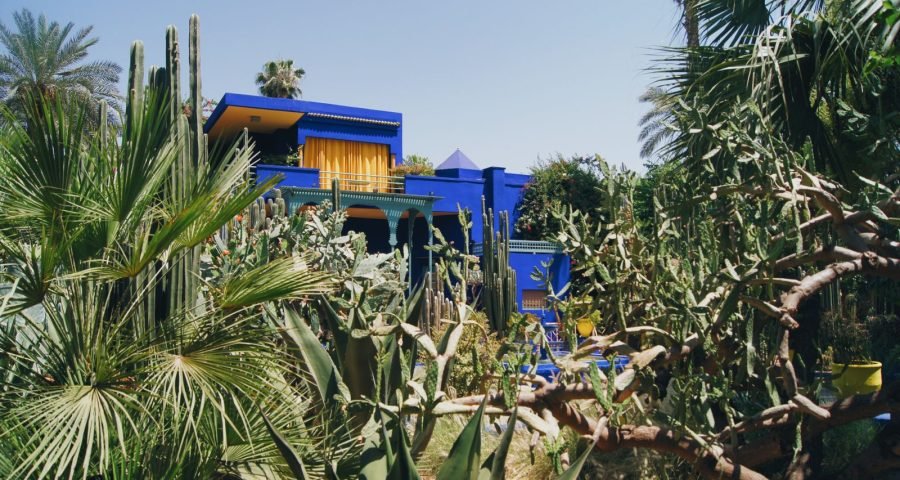
Jardin Majorelle, one of Marrakech's most-visited paid sights.
Day Trips From Marrakech
Marrakech’s location makes it an excellent base for day trips, and this is one of the city’s biggest practical advantages. The Sahara Desert is too far for a single day (plan at least an overnight), but the Atlas Mountains, the Ourika Valley, and the coastal town of Essaouira are all realistic day-trip distances with a private driver.
Atlas Mountains & Imlil — around 90 minutes from Marrakech, Imlil is the gateway village for Toubkal treks and a good half-day or full-day escape into Berber villages and mountain scenery. Ourika Valley — closer still, a lush river valley with waterfalls and small villages, a popular half-day trip. Essaouira — about 2.5 hours west, a full-day trip that trades the medina’s intensity for Atlantic sea air, a compact walkable medina, and fresh seafood, covered in more depth in our Essaouira guide. Ait Ben Haddou — the UNESCO-listed kasbah, about 3.5 hours round trip, usually combined with the start of a longer desert route rather than done as a pure day trip.
Food in Marrakech
Marrakech is one of the best cities in Morocco to eat well at every budget. Street food around Jemaa el-Fnaa’s evening food stalls is genuinely excellent and inexpensive, worth trying at least once despite the initial hesitation many first-time visitors feel. Tagine and couscous are the staples everywhere, but Marrakech’s food scene extends well beyond them — tanjia (a slow-cooked meat dish traditionally prepared by bathhouse furnace) is a genuine local specialty worth seeking out, and the city’s riad restaurant scene offers everything from simple home-style cooking to elaborate multi-course dinners with live music. See our full Moroccan food guide for what to actually order.
Getting Around Marrakech
The medina is walkable but disorienting; petit taxis (small, metered for local trips, though drivers often prefer a flat negotiated rate) are cheap and useful for medina-to-Gueliz journeys. For anything beyond the city — day trips, airport transfers, or heading onward to the desert or coast — a private driver is by far the most efficient and comfortable option, and is how we structure every Marrakech-based itinerary we build.
Practical Tips for Visiting Marrakech
A few essentials before you land.
- Best time to visit: spring (March-May) and autumn (September-November) for comfortable temperatures
- Marrakech Menara Airport is about 20 minutes from the medina; arrange a pickup in advance to avoid arrival-hall taxi hassle
- Dress modestly in the medina and souks (shoulders and knees covered) out of cultural respect
- Agree on taxi fares before getting in, or use a private driver to avoid the issue entirely
- Fridays see many local shops close for prayers, particularly around midday
- Riads are typically reached on foot; pack light or expect help from your riad with luggage in the medina
- A guided orientation walk on your first day makes the rest of your stay far easier to navigate solo
What to Buy in the Souks
Leather goods (bags, poufs, babouche slippers) from the tanneries quarter are a genuine Marrakech specialty, best inspected for stitching quality before buying. Hand-knotted Berber rugs vary enormously in price and quality; a reputable dealer will explain the region and technique behind a specific piece rather than just quoting a price. Ceramics from Safi and the Atlas regions, brass and metal lanterns, and pure argan oil (cosmetic or culinary, look for a clear source cooperative rather than a roadside stall) all make genuinely worthwhile souvenirs. Spices sold by weight in the souks are usually good value and easy to pack, and a favorite low-effort gift for travelers short on luggage space.
Frequently Asked Questions
Two to three days is enough to see the medina’s main sights, the souks, and Jardin Majorelle at a comfortable pace, with a fourth day if you want to add a day trip to the Atlas Mountains or Essaouira.
Yes, Marrakech is generally very safe, with the main risks being petty theft and persistent unofficial guides rather than violent crime. See our full Morocco safety guide for more detail.
The medina for atmosphere and walkability to major sights, Gueliz for an easier, more modern base, or Hivernage for a quieter, resort-style stay. Most first-time visitors enjoy at least one riad stay in the medina.
Yes, and it pairs naturally with a short Sahara Desert extension — see our 3-day Marrakech to Merzouga desert tour for the most popular short combination.
Not strictly, but a guided orientation walk on your first day is genuinely useful for building the confidence to explore solo afterward, and helps you avoid the most common tourist friction points.
Spring and autumn offer the most comfortable temperatures. Summer is intensely hot, and winter is mild during the day but cool at night. See our full best time to visit Morocco guide for details.
PLAN YOUR TRIP
Ready to Explore Marrakech and Beyond?
Tell us your dates, and we’ll design a private Marrakech-based itinerary, with or without an extension into the Sahara Desert, Atlas Mountains, or coast.