
TRAVEL TIPS
Best Time to Visit Morocco
An honest, month-by-month guide to Morocco’s weather, from the imperial cities to the Sahara Desert and the High Atlas — so you can pick the right season for the trip you actually want.
Morocco's Climate at a Glance
Morocco is a bigger, more climatically varied country than most first-time visitors expect. A single February week could take you from mild, sunny 20°C days in Marrakech, to freezing overnight temperatures and genuine snowfall in the High Atlas passes, to a chilly but pleasant Atlantic coast in Essaouira. There is no single “best time to visit Morocco” that applies everywhere — the right season depends heavily on which regions you plan to see and what you want to do there.
That said, if you are planning a first trip and want one honest answer: spring (late March through May) and autumn (September through early November) are the two windows that work best across the widest range of regions, combining comfortable city temperatures with manageable desert heat and clear mountain trekking conditions. The sections below break down why, region by region and month by month, so you can plan around your specific itinerary rather than a generic recommendation.
Spring in Morocco (March–May)
Spring is, for most itineraries, the best overall season to visit Morocco. Daytime temperatures in Marrakech, Fes, and the imperial cities settle into a comfortable 20-27°C range, ideal for walking medinas and souks for hours without exhaustion. The countryside is at its greenest, the Dades and Todra valleys are lush, and wildflowers bloom across the Atlas foothills, particularly striking if your route passes through the Ourika or Azilal regions.
Spring is also the strongest season for Atlas Mountains trekking, since snow has largely cleared from the lower and mid-altitude trails by April, while higher routes like Toubkal remain in good, ambitious condition into May. In the Sahara, spring desert days are warm without being punishing, and nights are cold but not bitter, making it a genuinely comfortable time for a desert camp. The one caveat: late March through April can occasionally bring short, dusty wind events in desert regions, so it is worth building a little flexibility into a spring desert itinerary.
Summer in Morocco (June–August)
Summer is intensely hot inland, and this is the single most important thing to plan around. Marrakech, Fes, and the desert routes regularly see daytime highs of 38-45°C in July and August, which makes extended walking in the medinas genuinely uncomfortable in the middle of the day, and can make a desert camp night feel more like an endurance test than a highlight. If your itinerary is desert- or imperial-city-heavy, summer is the season we would steer most travelers away from.
Where summer genuinely shines is the Atlantic coast and the higher Atlas Mountains. Essaouira stays remarkably mild thanks to constant sea breeze, often 10-15°C cooler than Marrakech on the same day, and is one of the best places in the country to be in July and August. High-altitude mountain trekking above roughly 2,000 meters also remains comfortable, even pleasant, through summer, since elevation offsets the season’s heat. A well-designed summer itinerary leans into the coast and the mountains rather than fighting the desert heat.
Autumn in Morocco (September–November)
Autumn is spring’s quieter, equally strong counterpart, and arguably the best-kept-secret season for a Morocco trip. September still carries some of summer’s heat, particularly in the first half of the month, but by early-to-mid October, cities and the desert both settle into the same comfortable range that makes spring so appealing, without spring’s occasional wind events. The light is also exceptional for photography, with a clarity that makes the Atlas Mountains and desert dunes especially striking.
Autumn desert nights are genuinely one of the best times of year for a Sahara camp, cool enough for good sleep and stargazing without the bitter cold of deep winter. This is also harvest season in parts of the Atlas Mountains and the Dades Valley, including the famous rose harvest around Kelaat M’Gouna in early October, which adds a nice seasonal layer to a mountain-and-kasbah route.
Winter in Morocco (December–February)
Winter is Morocco’s most misunderstood season. Days in Marrakech and the southern cities are frequently mild and sunny, often 18-20°C, genuinely pleasant for sightseeing, and this is peak season for European travelers escaping colder home climates. What catches visitors off guard is the temperature swing: desert camp nights in the Sahara can drop close to freezing in December and January, and the High Atlas passes see real snowfall, occasionally closing mountain roads like the Tizi n’Tichka for short periods.
A winter Morocco trip works very well if you pack for the temperature swing — warm layers for desert nights and mountain routes, lighter clothing for city days — and it has real upsides: fewer crowds at major sites, better hotel and riad rates outside the December holiday peak, and some of the clearest, bluest skies of the year for photography. Snow-dusted Atlas peaks visible from Marrakech are a genuinely striking sight most visitors never expect.
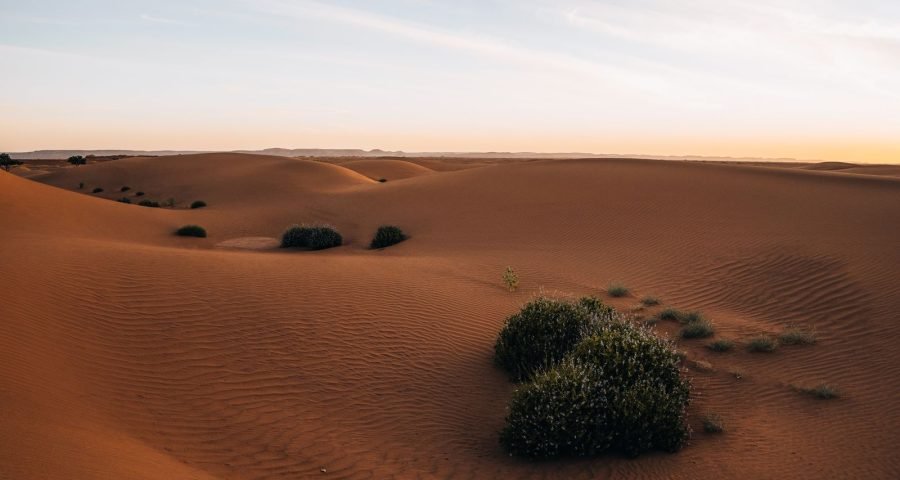
Autumn and spring offer the most comfortable Sahara desert camp nights of the year.
Best Time to Visit by Region
Marrakech & the Imperial Cities
Spring and autumn are the sweet spots — comfortable enough for full days of walking without the extreme heat of July and August. Winter is a close second: mild and sunny most days, with the tradeoff of cooler evenings. If your trip is mostly city-based, avoid mid-June through August unless you plan to structure your days around the heat, with sightseeing in the morning and evening and rest in the afternoon.
The Sahara Desert
Autumn through spring (October to April) is the strongest window for the Sahara — comfortable days, genuinely enjoyable evenings, and clear night skies for stargazing. Summer desert camps are still possible and can be memorable, but the heat is intense and not for everyone. If a desert camp and camel trek is a priority on your Morocco desert tour, we generally steer summer bookings toward an early-morning or late-afternoon arrival to avoid the worst midday heat.
The Atlas Mountains
Late spring through early autumn (May to October) is best for trekking, once winter snow has cleared from most trails. Winter brings genuine snow to higher elevations, beautiful to see but requiring proper gear and experience for anything beyond a short valley walk. Shoulder-season trekkers should check specific route conditions with their guide, since exact snowmelt timing varies year to year.
The Atlantic Coast
Essaouira and the coast are the most forgiving region on the calendar, comfortable nearly year-round thanks to consistent sea breeze. Summer is actually one of the best times to be on the coast, since it offers relief from inland heat, while winter is mild but breezier, better suited to a cozy medina wander than a beach day.
Best Time to Visit by What You Want to Do
Desert Camping & the Sahara
Aim for October through April for the most comfortable overnight desert camp experience, with autumn and spring offering the best balance of warm days and bearable nights.
Mountain Trekking
May through October for most routes, with June through September best for higher-altitude treks like Toubkal that need snow-free conditions. For desert, surf, and festival timing too, see our season-by-season activity guide.
Beach & Coastal Time
Year-round works, but June through September is peak season for warm water and beach weather on the Atlantic coast.
Festivals & Ramadan
Ramadan’s dates shift each year on the Islamic lunar calendar, and it is worth checking against your travel dates. Restaurants and cafes still operate for tourists, but daytime hours in smaller towns can feel quieter, and it is respectful to avoid eating or drinking in public during daylight. The days immediately following Ramadan (Eid al-Fitr) see heavy domestic travel and higher prices, worth avoiding if flexible.
Month-by-Month Quick Guide
A fast reference if you already have travel dates in mind.
- January: Mild, sunny cities; cold desert nights and mountain snow — pack warm layers
- February: Similar to January, with occasional Atlas snow closures on mountain passes
- March: Spring begins — comfortable everywhere, greenery returning to the valleys
- April: One of the best all-round months; mountains trails opening up, deserts pleasant
- May: Warm but not yet extreme; last comfortable month for lower desert routes before summer heat
- June: Hot inland, excellent on the coast and in higher mountains
- July: Peak heat in cities and desert; best reserved for coastal and high-altitude trips
- August: Similar to July, intensely hot inland, ideal on the Atlantic coast
- September: Heat easing by mid-month; a strong transitional month
- October: One of the best months of the year — comfortable everywhere, rose harvest in the Dades Valley
- November: Still excellent, cooling toward winter; fewer crowds
- December: Mild, sunny days; cold nights in the desert and mountains; busy around the holidays
Good to Know
- There is no universally "best" month — the right time depends on which regions and activities are on your itinerary
- Spring (March-May) and autumn (September-November) work best across the widest range of regions
- Summer inland heat is intense; lean toward the coast and higher mountains if traveling June-August
- Winter is mild in the cities but genuinely cold at night in the desert and mountains — pack layers
- A private, flexible itinerary lets you shift the pace or route around the season, rather than fighting it
Frequently Asked Questions
April and October are generally considered the two strongest single months, offering comfortable temperatures in the cities, mountains, and desert alike, with good conditions for trekking and desert camping.
Inland cities and the desert get very hot in July and August, often above 38°C, which can make midday sightseeing uncomfortable. The Atlantic coast and higher Atlas Mountains stay pleasant through summer and are a better focus for a summer trip.
Yes, especially from November through February, when desert camp nights can drop close to freezing. Spring and autumn nights are cool but comfortable, and summer nights are warm.
May through October for most routes, once winter snow has cleared. Higher-altitude routes like Toubkal are best from June through September.
Ramadan’s dates shift yearly. Tourist restaurants and cafes still operate, but it is respectful to avoid eating or drinking in public during daylight hours, and the days right after Ramadan see heavy domestic travel.
Yes. Spring and autumn are popular but still noticeably quieter than the December holiday period, and winter (outside the holidays) offers the best rates and smallest crowds at major sites.
PLAN YOUR TRIP
Ready to Plan Your Morocco Trip?
Tell us your travel dates and interests, and we’ll design a private itinerary built around the season and regions that make sense for you.