TRAVEL TIPS
Is Morocco Safe for Tourists?
An honest, practical look at safety in Morocco — what the real risks are, what to expect as a tourist, and how solo and female travelers in particular can plan around the few genuine friction points.
The Short Answer
Yes, Morocco is safe for tourists. Millions of visitors travel through Marrakech, Fes, the Sahara Desert, and the Atlas Mountains every year, and violent crime against tourists is rare. Morocco is generally considered one of the more stable and tourism-ready countries in North Africa, with an economy that depends heavily on visitors and a government that takes tourist safety seriously, including a dedicated tourist police force (Brigade Touristique) in major cities.
That said, “safe” does not mean “friction-free,” and the real question most travelers actually want answered is not whether Morocco is dangerous, but what specifically to expect and plan around. The rest of this guide covers that in detail — the genuine, common annoyances, the rare real risks, and how they differ by city, region, and traveler.
What the Real Risks Actually Are
The risks solo travelers and tourists in Morocco most commonly encounter are petty and situational, not violent. Pickpocketing in crowded areas like Jemaa el-Fnaa square or busy souks does happen, as it does in any major tourist destination worldwide, and is the most-cited genuine safety concern. Unofficial “guides” who approach tourists near medina entrances, offering directions or tours for a fee (sometimes aggressively), are the most commonly reported daily annoyance, more a nuisance than a danger. Overcharging in taxis and souks without a metered fare or a clear pre-agreed price is common and worth planning around, though it is a financial friction point, not a safety one.
Violent crime against tourists is genuinely rare, and the areas frequented by visitors are generally well-policed and well-lit at the hours tourists are typically out. The most realistic “danger” most travelers actually encounter in Morocco is simply getting lost or disoriented in a medina’s maze-like streets, which is disorienting rather than dangerous, but can feel stressful for a first-time solo visitor without local support.
Is Morocco Safe for Solo Female Travelers?
This deserves a direct, honest answer, since it is the single most common safety question we receive. Yes, thousands of women travel Morocco solo every year, and the large majority describe it as a positive, empowering experience. At the same time, solo female travelers commonly report street harassment in the form of persistent comments or unwanted attention, particularly in busy medina streets, and this is a real, frequently reported pattern worth planning around rather than dismissing.
In practice, dressing modestly (shoulders and knees covered), walking with visible confidence, and not engaging with unwanted comments resolves most of this. The structural fix that removes the most stressful moments — uncertain taxi negotiations and getting lost while searching for a riad — is traveling with a private driver and guide rather than navigating public transport and street directions alone. We cover this in far more depth, including full itinerary guidance, in our dedicated solo travel and solo female travel guide.
Health & Medical Safety
No unusual vaccinations are required for most travelers visiting Morocco, though routine vaccinations should be up to date as with any international trip, and it is worth checking current guidance with a travel clinic before departure. Tap water is best avoided in favor of bottled or filtered water, particularly outside major hotels, to avoid the mild stomach upset some travelers experience from a change in water and food. Major cities have good-quality private clinics and pharmacies, and pharmacists are generally well-trained and can help with minor ailments directly. Travel insurance that covers medical evacuation is strongly recommended, particularly for desert and mountain itineraries far from major hospitals. For the entry paperwork side of things (most Western nationalities need no advance visa), see our Morocco visa and entry requirements guide.
Road Safety & Transport
Road conditions and driving standards in Morocco are the safety factor most likely to actually affect a trip, more so than crime. Driving styles are more assertive than many Western travelers are used to, mountain roads like the Tizi n’Tichka pass involve genuine hairpin turns and drop-offs, and self-driving is not something we generally recommend for visitors unfamiliar with the roads. This is the core reason nearly all of our itineraries are built around an experienced private driver rather than self-drive or public transport — it removes the single biggest practical risk factor in an average Morocco trip.
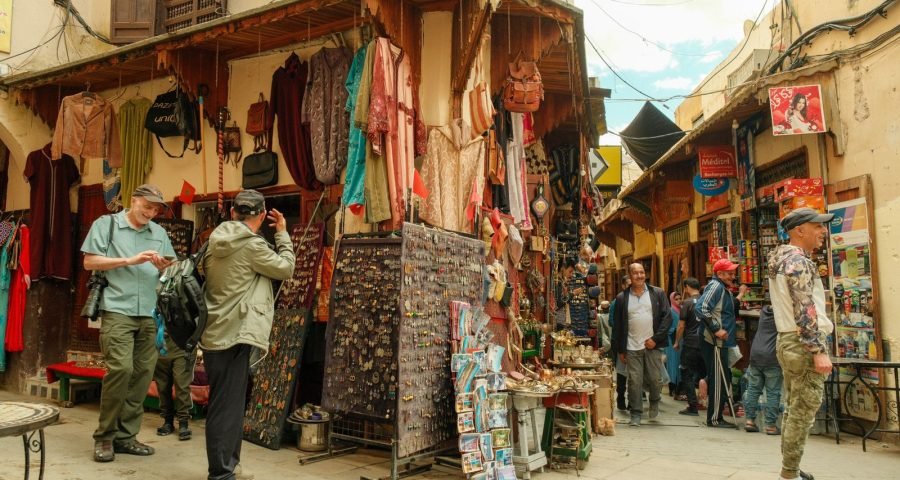
Millions of tourists explore Morocco's medinas every year without incident.
How Private Travel Reduces Risk
The single biggest factor separating a smooth Morocco trip from a stressful one is not luck, it is logistics. Most of the situations that make tourists uneasy — negotiating an unmetered taxi, getting lost searching for a riad after dark, fending off a persistent unofficial guide — simply do not arise when you are traveling with a private driver and guide. You are met at the airport, driven directly where you need to go, and have someone local to answer questions or handle a problem in real time rather than figuring it out alone in an unfamiliar language and city.
This is the core reason nearly every itinerary we build is private rather than a mix of public transport and self-navigation. It is not about avoiding Morocco’s culture or medinas, quite the opposite: a good local guide gets you deeper into that culture, more comfortably and safely, than trying to piece it together solo.
Is Morocco Safe by City & Region?
Marrakech
Morocco’s most-visited city and generally very safe for tourists, with a heavy, visible tourism infrastructure and police presence around Jemaa el-Fnaa and the main medina. Petty theft and persistent vendors are the main things to stay alert for, particularly in crowded evening hours in the main square.
Fes
Fes’s medina is the largest car-free urban area in the world and genuinely easy to get lost in. It is safe, but the disorientation factor is real, making a guided orientation walk on arrival particularly worthwhile here more than almost anywhere else in Morocco.
Chefchaouen
Widely considered one of the most relaxed, low-stress towns in Morocco for independent walking, with a small, walkable blue medina and a noticeably calmer pace than Marrakech or Fes.
The Sahara Desert
Very safe in terms of crime, but remote in terms of logistics — the real risk here is arranging a trustworthy camel trek and camp independently, which is why we strongly recommend booking desert experiences as part of a private Morocco desert tour rather than improvising on arrival in Merzouga.
Casablanca
A large, modern working city rather than a tourist-oriented medina town, and safe for tourists in the areas most visitors actually spend time in, though it warrants the same general-city awareness as any major metropolitan area worldwide.
Practical Safety Tips
Small habits that resolve most of the friction points tourists actually encounter.
- Agree on taxi fares before getting in, or use a private driver to avoid the issue entirely
- Keep valuables in a money belt or zipped bag in crowded souks and squares, especially in the evening
- Politely decline unsolicited "guide" offers near medina entrances; a firm "no, thank you" is normal and expected
- Dress modestly (shoulders and knees covered) to blend in and reduce unwanted attention
- Save your riad or hotel's address and phone number in Arabic script to show a taxi driver or passerby if lost
- Keep a photo of your passport and travel insurance details accessible on your phone
- Trust your instincts around any situation that feels off, the same as you would anywhere else in the world
Common Scams to Watch For
Beyond general pickpocketing, a handful of specific scams come up often enough to name directly, so you can recognize and sidestep them without stress. The most common is an unsolicited “helper” who offers directions and then either demands payment or leads you toward a specific shop paying them commission — a polite, firm decline works every time. A second is the henna tattoo approach, where a henna artist applies a design to your hand before agreeing on a price, then demands a high fee afterward; always agree a price first, or simply decline. A third is being told a well-known landmark or gate is “closed today” by a stranger who then offers to guide you elsewhere — this is almost always false and worth verifying yourself or with your own guide.
None of these are dangerous, and recognizing the pattern in advance takes almost all of the sting out of them. Most travelers who arrive knowing what to expect find they simply do not fall for any of it.
Frequently Asked Questions
Yes. Morocco remains one of the more stable, tourism-ready destinations in North Africa, with millions of visitors traveling safely every year and a dedicated tourist police force in major cities.
Generally yes, though street harassment in the form of unwanted comments is a commonly reported experience. Dressing modestly and traveling with a private driver and guide removes most of the situations solo female travelers describe as stressful. See our full solo female travel guide for more detail.
Petty theft and persistent unofficial guides in crowded tourist areas are the most common issues, not violent crime. Road safety on self-driven routes is also a genuine factor worth planning around.
Yes, we recommend it for every trip, particularly one covering medical evacuation for desert and mountain itineraries that are far from major hospitals.
Main tourist areas are generally safe and well-populated in the evening, but as in any major city, it is sensible to stick to well-lit, busier streets and avoid wandering into unfamiliar medina alleys alone late at night.
Yes, but agree on the fare before getting in, since unmetered overcharging is common. A private driver removes this issue entirely and is what we build every itinerary around.
PLAN YOUR TRIP
Travel Morocco With Real Local Support
A private driver and guide removes nearly every common safety concern travelers ask us about. Tell us your dates and we’ll build a trip designed around your comfort and pace.