MONEY & BUDGETING
Money in Morocco: Currency, ATMs, Cards & Tipping
The dirham is a closed currency, ATM fees changed in 2026, and cash still rules the souks. Here’s exactly how to handle money on a Morocco trip without overpaying, running short, or carrying more cash than you need.
The Dirham Is a Closed Currency
The Moroccan dirham (MAD) is a closed currency — it can’t legally be exchanged in any meaningful quantity outside Morocco, and banks and exchange desks back home won’t stock it. Ordering dirhams before your trip, the way you might for euros or dollars, simply isn’t an option worth planning around.
The dirham is divided into 100 centimes; you’ll see prices written both ways (30 MAD or 30dh, and occasionally in centimes for very small amounts). Banknotes come in 20, 50, 100, and 200 MAD denominations — practically speaking, plan to get all your cash after you land.
Getting Cash: ATMs and the New 2026 Fee
ATMs are genuinely everywhere — every city, most towns, and a bank of them in the arrivals hall at Mohammed V Airport in Casablanca, so you can withdraw dirhams within minutes of landing using an international card. This is the standard, recommended way to get cash in Morocco, and it usually gives a fairer rate than exchanging cash.
Since January 2026, Moroccan bank ATMs have added a flat fee of around 35 MAD per withdrawal, on top of whatever your own bank charges for foreign withdrawals, and some machines cap a single withdrawal around 2,000 MAD. The practical takeaway: withdraw larger amounts less often rather than making frequent small withdrawals, and check your own bank’s foreign-ATM fee before you leave home.
Cards vs Cash: Where Each One Actually Works
Larger hotels, international-standard riads, and mid-to-upscale restaurants in cities like Marrakech, Fes, Casablanca, and Rabat generally accept Visa and Mastercard. Smaller traditional riads sometimes accept cards too, but occasionally add a small processing fee or prefer cash outright.
Souks, taxis, small local restaurants, cafés, rural areas, and desert routes are effectively cash-only — the vast majority of souk vendors don’t take cards at all. Carry at least 500–1,000 MAD in small notes (20s and 50s) at all times; breaking a 200 MAD note with a street vendor is often genuinely difficult for them.
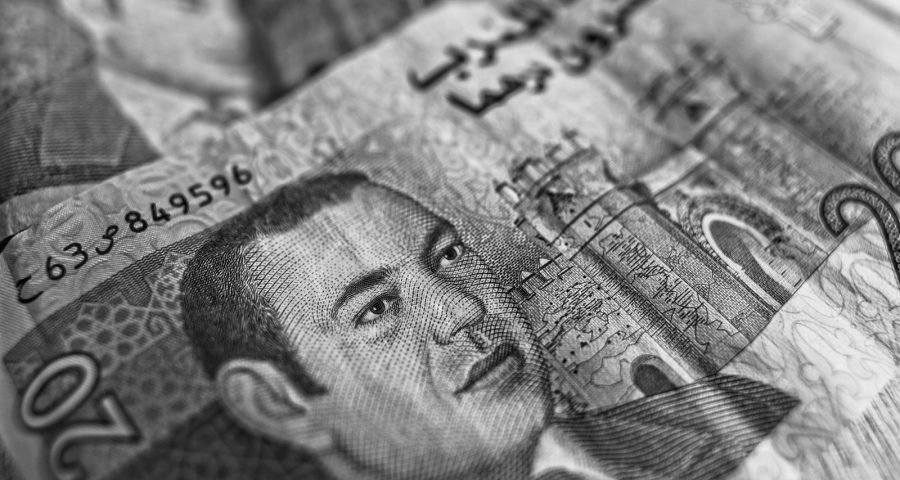
Always Carry Cash in Small Notes
Tipping in Morocco (Baksheesh)
Tipping — locally called baksheesh — is woven into daily life as a gesture of thanks rather than a strict percentage. Always tip in cash, in dirhams.
- Restaurants: a few dirhams is fine at simple local spots; 5–10% at mid-range restaurants when service was good; around 10% at upscale places unless service is already included.
- Riad staff: roughly 20–50 MAD per night for general housekeeping, and 50–100 MAD for whoever prepares breakfast or dinner directly for you.
- Tour guides: 100–200 MAD per person for a full day, 50–100 MAD for a half day; group-tour guides typically receive 20–50 MAD per person per day.
- Drivers: around 50–100 MAD per person per day on multi-day trips.
- Hammam attendants: roughly 20–50 MAD on top of the treatment price, more at an upscale spa hammam.
Common Money Mistakes to Avoid
The small mistakes that cost travelers real money, or real hassle, on a Morocco trip.
- Trying to get dirhams before you arrive: it's a closed currency — you'll waste time and likely pay a terrible rate for a token amount, if you can even find it.
- Making many small ATM withdrawals: the flat ~35 MAD fee per transaction adds up fast — withdraw less often, in larger amounts.
- Relying on cards alone: souks, taxis, and rural areas are cash-only — running out of cash outside a city center can genuinely strand you.
- Trying to break large notes with street vendors: a 200 MAD note for a 20 MAD purchase is a real problem for a small stall — break large notes at hotels or supermarkets instead.
- Over-withdrawing at the end of your trip: unused dirhams can sometimes be changed back at the airport with your exchange receipt, but rates are poor and it isn't guaranteed everywhere — better to estimate closely.
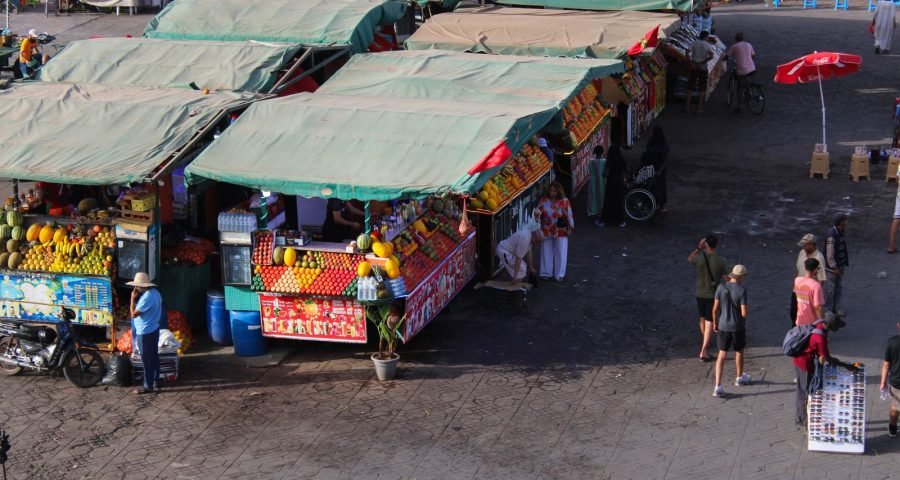
In the Souk, Cash Is Still King
Good to Know
A few more practical details worth knowing before you go.
- Exchange rates at home are bad: airport bureaux de change and banks back home rarely stock MAD, and when they do, the rate is poor — wait until you land.
- Keep small bills for taxis: petit taxi drivers often genuinely lack change for large notes, especially early in the day.
- Bargaining is expected in souks, not fixed-price shops: see our full guide to Darija bargaining phrases for the actual words to use.
- Budget ranges vary a lot by travel style: if you haven't already, our Morocco Travel Costs guide breaks down realistic daily budgets by style of trip.
Related on Marvels of Morocco: Morocco Travel Costs — Moroccan Arabic (Darija) Phrasebook — Morocco Travel Guide
Frequently Asked Questions
TRAVEL PLANNING
Want a Realistic Budget for Your Own Trip?
Tell us your dates, interests, and group size, and we’ll help you plan a trip with a realistic sense of what it’ll actually cost, cash and all.