
DESTINATIONS
Ait Ben Haddou & Ouarzazate Travel Guide
A UNESCO-listed earthen fortress on the old caravan road south of Marrakech, and the desert-edge town next door that’s quietly home to the world’s largest film studio — usually seen from a bus window on the way to the Sahara, and worth a proper stop instead.
Ait Ben Haddou: a Thousand Years of Rammed Earth
Ait Ben Haddou is a ksar — a fortified, communal earthen village — built and continuously rebuilt in pisé (rammed earth) for over a thousand years on the old caravan route between the Sahara and Marrakech, over the Tizi n’Tichka pass through the High Atlas. UNESCO added it to the World Heritage List in 1987, and it sits about 8km off the N9 road between Marrakech and Ouarzazate.
Almost nobody actually lives inside the ksar anymore. In the 1940s more than 90 families called it home; today the number still living full-time within the walls is down to a handful — estimates range from roughly three to eight families depending on the source and the season, with most residents having long since moved to the newer village across the river. What’s left standing is maintained partly by UNESCO funding and partly because the site earns its keep as one of the most filmed backdrops in the world.
Ait Ben Haddou on Screen
David Lean shot much of Lawrence of Arabia here in 1962, and the ksar has barely had a break since — Gladiator, Kingdom of Heaven, The Mummy, Prince of Persia, and four seasons of Game of Thrones (it stood in for Yunkai, one of the slave cities of Slaver’s Bay) were all filmed on or around these walls. Local guides will point out exactly which alley belonged to which production — the site is arguably Africa’s most filmed single location.
Crossing the River and Climbing to the Top
The ksar sits across the Asif Ounila river from the newer village where most visitors park. In the dry season (most of the year) you cross via sandbag stepping stones or a simple pedestrian footbridge in a couple of minutes; after rain or the High Atlas spring thaw, the river can rise enough to cover the stones, so build in a little flexibility if you’re visiting in spring. Once inside, a marked path climbs to a ruined agadir (fortified granary) at the top of the hill — the real reason to visit isn’t just the ksar itself but the panoramic view from up there over the palm grove and the river valley.
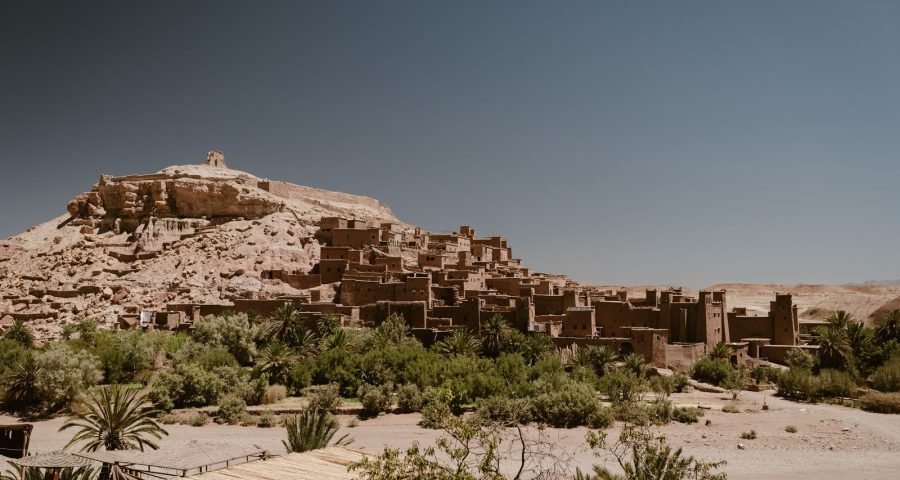
The Ksar of Ait Ben Haddou, Crossed by Footbridge Over the Asif Ounila
Ouarzazate: the Town Next Door, and ‘Ouallywood’
Ouarzazate is a separate, modern town 30km away — bigger, with most of the region’s hotels, and home to Atlas Studios, founded in 1983 and, by area, the largest film studio in the world. Locals call the town Ouarzawood; portions of well over 100 productions have been shot here or at Ait Ben Haddou, from Gladiator‘s Roman streets to Black Hawk Down‘s military-base sets. The studio runs daily tours (roughly 9am–6pm, closed when active filming is underway) through standing sets from past productions.
Kasbah Taourirt, in Ouarzazate Itself
If you only have time for one more site, make it Kasbah Taourirt, right in Ouarzazate — the former residence of the Glaoui family, who controlled this region as pashas under the French protectorate. It’s a genuine maze of decorated rooms, earthen towers, and terraces, and gets far less crowded than Ait Ben Haddou despite being just as photogenic.
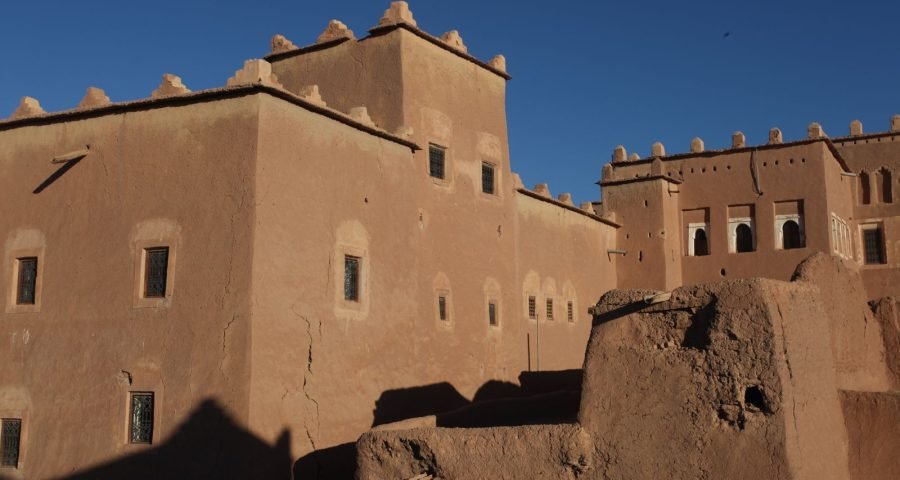
Kasbah Taourirt, the Former Glaoui Residence in Ouarzazate
Good to Know
- Getting there: around 4–5 hours from Marrakech by road over the Tizi n’Tichka pass — dramatic mountain driving, not a quick hop. Most visitors combine it with an onward trip to the Sahara rather than a there-and-back day trip; see our Marrakech to Merzouga route guide.
- Best light: early morning or the last two hours before sunset, both for photography and to avoid the midday tour-bus crush.
- Wear proper shoes: the climb inside the ksar to the old granary is on uneven stone and earth paths, not paved.
- It's still a living site: a handful of families and several small shops and guesthouses operate inside the walls — buying a drink or a small souvenir there directly supports the site's upkeep.
- Combine with Ouarzazate: most desert-route itineraries treat Ait Ben Haddou and Ouarzazate as one stop, not two separate trips.
Frequently Asked Questions
PLAN YOUR TRIP
Want Ait Ben Haddou Built Into Your Sahara Route?
Tell us your dates and interests, and we’ll build Ait Ben Haddou and Ouarzazate naturally into a Marrakech-to-Merzouga route, instead of a rushed photo-stop from a bus window.