
FOOD & CULTURE
What to Eat in Morocco: A Real Food Guide
Moroccan food is aromatic, not spicy — built on warm spices like cumin, ginger, cinnamon, and saffron rather than chili heat. Here’s what to actually order, what to look for on the street, and how to eat like you’ve done this before.
Tagine and Couscous: the Two Dishes Everyone Knows
A tagine is named after the conical clay pot it’s cooked in — the pointed lid traps steam and returns the moisture to the dish, letting meat or vegetables cook for hours over low heat with almost no added liquid. Classic versions include lamb with prunes and almonds, chicken with preserved lemon and olives, and kefta (spiced meatball) tagine baked with eggs.
Couscous is the other staple, traditionally served on Fridays (the Muslim holy day) — steamed semolina topped with a stew of meat and often seven different vegetables. Most tourist restaurants serve it daily, but if you want it the way Moroccan families actually eat it, a Friday lunch is the real version.
Pastilla and Harira: Sweet-Savory and Soul-Warming
Pastilla (also spelled bastela) is a sweet-savory pie — traditionally pigeon, now often chicken or seafood, mixed with almonds, cinnamon, and sugar, wrapped in paper-thin warqa pastry, and dusted with powdered sugar and cinnamon on top. It sounds like it shouldn’t work. It works.
Harira is a hearty tomato, lentil, and chickpea soup, central to breaking the fast during Ramadan but eaten year-round — the closest thing Morocco has to a national comfort food. Note that traditional harira is usually made with a meat-based broth, so ask if you need a vegetarian version.
Tanjia: Marrakech's Own Secret
Tanjia is Marrakech’s own dish and rarely appears on menus elsewhere: lamb or beef slow-cooked for hours in a sealed clay urn, traditionally buried in the ashes of a hammam furnace overnight rather than cooked in a kitchen. It’s sometimes called a “bachelor’s dish” — historically prepared by working men with no time to cook, who’d drop the urn off at the hammam in the morning and collect it, fully cooked, in the evening.
Because it needs a hammam furnace, it’s genuinely hard to make at home — ask specifically for it in Marrakech rather than expecting to find it elsewhere in the country.
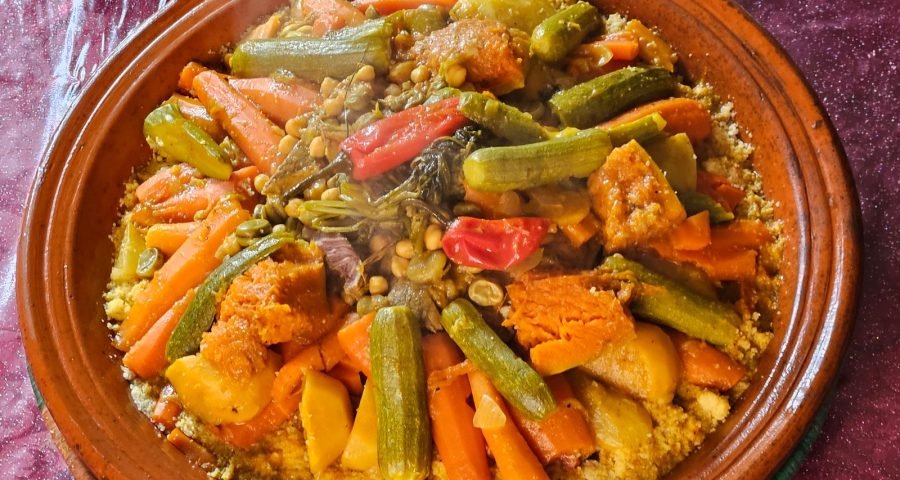
The Aroma Is Warm Spice, Not Heat
Street Food Worth Seeking Out
Jemaa el-Fna square in Marrakech is the country’s street-food capital, with food stalls lighting up around 5–6pm — but every city has its own version.
- Msemen: a flaky, layered square pancake, eaten plain, with honey, or wrapped around a savory filling — a common breakfast.
- Harcha: a semolina flatbread with a slightly crumbly, cornbread-like texture, usually served with butter and honey.
- Sfenj: Moroccan doughnuts — yeast-leavened, unsweetened in the dough itself, and best eaten hot from the fryer, sometimes dipped in sugar.
- Babbouche (snail soup): a spiced snail broth sold from evening street carts, eaten with a toothpick to pull the meat from the shell — more common, and more approachable, than it sounds.
- Maakouda: deep-fried spiced potato fritters, often tucked into a piece of bread as a cheap, filling snack.
If You're Vegetarian or Vegan
Morocco isn’t built around vegetarian cuisine, but it’s easier than most first-time visitors expect.
- Vegetable tagines are on nearly every menu, not just a token option — usually a genuine, full plate of seasonal vegetables in the same slow-cooked style as the meat versions.
- Zaalouk — a smoky cooked eggplant and tomato dip, usually served with bread as a starter, and naturally vegan.
- Bread, olives, and fresh cheese make up much of a typical Moroccan breakfast alongside msemen and harcha, which are also naturally vegetarian.
- Ask before ordering harira: the traditional broth is usually meat-based, even though the soup itself is mostly lentils and vegetables.
- Fresh orange juice and avocado smoothies are sold everywhere and are a genuinely reliable, cheap option between meals.
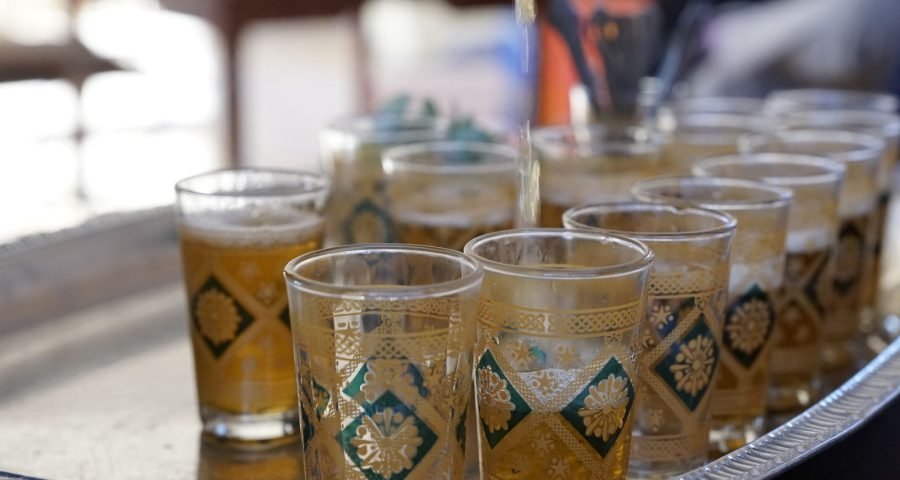
Mint Tea Is a Ritual, Not Just a Drink
Eating Like a Local: Etiquette That Matters
A few habits that make meals feel less like a performance and more like the real thing.
- Eat with your right hand: in traditional settings, especially with bread, the right hand is used for eating — the left is considered unclean for food.
- Bread is the utensil: a piece of khobz (round Moroccan bread) is often used to scoop up tagine or salad instead of a fork.
- Tagines are often communal: in a home or a traditional setting, everyone eats from the same dish, each working from the section directly in front of them.
- Accept the mint tea: it's offered constantly, in shops and riads alike, as a genuine gesture of hospitality — politely declining repeatedly can read as rejecting the hospitality itself, not just the drink.
Related on Marvels of Morocco: Marrakech Travel Guide — Money in Morocco: Currency, ATMs & Tipping — Moroccan Arabic (Darija) Phrasebook
Frequently Asked Questions
TRAVEL PLANNING
Want Real Food Experiences Built Into Your Trip?
Tell us your dates and interests, and we’ll help you find the food markets, cooking experiences, and local spots that go beyond the tourist-menu version of Moroccan cuisine. Want to cook it yourself? See our Moroccan food & cooking experiences in Marrakech and Fes.