
DESTINATIONS
Rabat Travel Guide
Morocco’s capital is the country’s most overlooked imperial city — a calm, walkable mix of a 12th-century fortress, Roman ruins, and wide French-built boulevards, usually seen (if at all) as a rushed stop between Casablanca and Fes.
Rabat: Morocco's Capital, Not Its Tourist Trail
Rabat is Morocco’s political capital and the King’s primary residence, but it rarely makes it onto first-time itineraries — most travelers move between Casablanca’s airport and Marrakech or Fes without stopping. That’s arguably its biggest advantage: no touts pulling at your sleeve in the medina, no elaborate bargaining performances, just a genuinely calm, well-kept city that happens to hold some of Morocco’s most significant historic sites.
The city splits cleanly into two personalities that share a single UNESCO listing (2012, “Rabat, Modern Capital and Historic City: a Shared Heritage”) — the 12th-century Almohad old town along the Bou Regreg river, and the wide avenues and administrative buildings the French built from 1912 onward. Few Moroccan cities show that contrast this clearly, side by side, within a 20-minute walk.
The Kasbah of the Udayas and Hassan Tower
The Kasbah of the Udayas is a 12th-century fortress on a bluff over the Atlantic and the mouth of the Bou Regreg — blue-and-white lanes, an Andalusian garden, and a terrace looking out over the water toward Salé. A 15–20 minute walk away is the Hassan Tower, the unfinished 12th-century minaret of what was meant to be one of the largest mosques in the western Muslim world; its rows of stone columns and the modern Mausoleum of Mohammed V beside it (built after independence, with a green-tiled roof and Alaouite-dynasty guards at the entrance) together form the city’s single most photographed spot.
Chellah and Other Things to See
Chellah is a walled necropolis a short taxi ride from the center, built over the ruins of the Roman town of Sala Colonia and later used as a Merinid-dynasty burial ground — crumbling minarets with nesting storks, quiet gardens, and far fewer visitors than anywhere in Marrakech or Fes. The Rabat medina itself is smaller and calmer than those two, worth an hour of wandering rather than a full day; and the Mohammed VI Museum of Modern and Contemporary Art, near the train station, is one of the only serious contemporary art museums in the country.
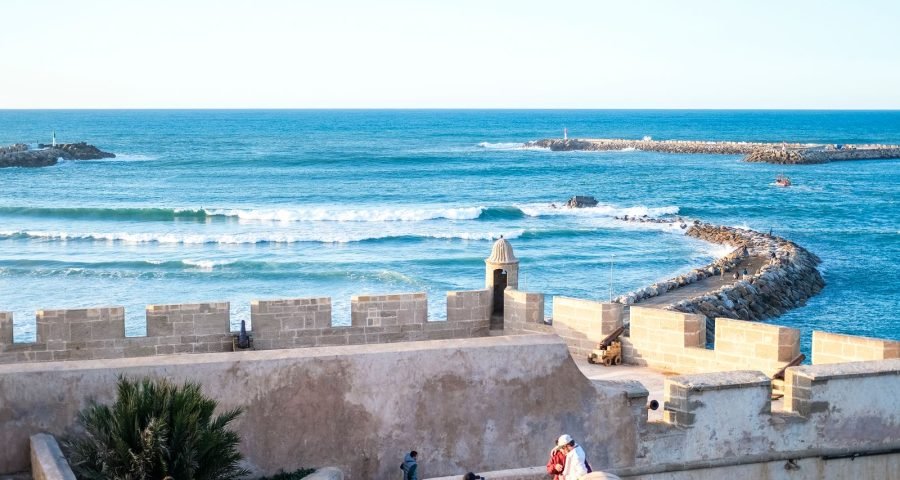
The Kasbah of the Udayas, Overlooking the Bou Regreg Estuary
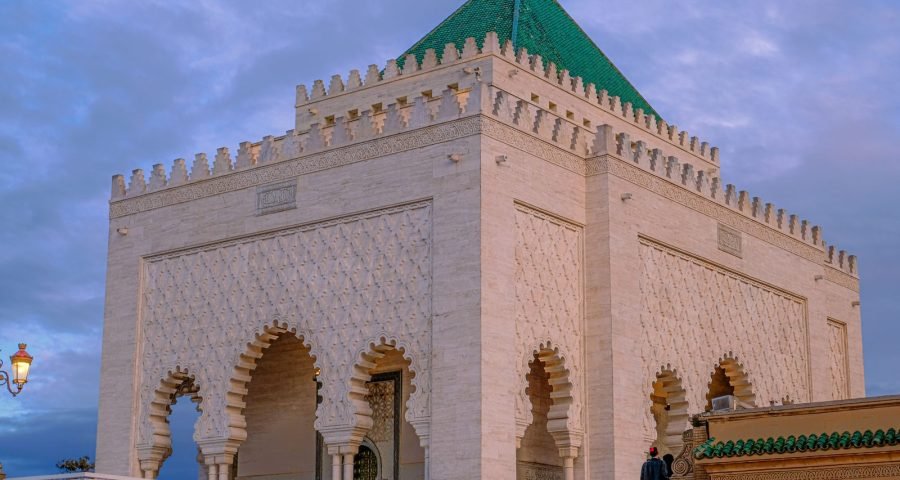
The Mausoleum of Mohammed V, Beside Hassan Tower
How Much Time Should You Spend in Rabat?
A full day covers the essentials comfortably — the Kasbah of the Udayas in the morning, Hassan Tower and the Mausoleum around midday, Chellah in the late afternoon when the light is best for photos. Rabat works well as a day trip from Casablanca or as a stopover on the way to Chefchaouen or Tangier, rather than a dedicated multi-night stay for most first-time visitors.
Getting to Rabat by Train
Rabat has excellent rail connections, which is part of why it works so well as a stopover. The regular ONCF train from Casablanca takes under an hour; the Al Boraq high-speed line — which also runs Tangier–Rabat–Casablanca — covers the same route in well under an hour at up to 320 km/h, with departures roughly every hour through the day. There are also direct trains from Fes and Marrakech, so Rabat slots into almost any north–south Morocco itinerary without a real detour.
Good to Know
- UNESCO status: “Rabat, Modern Capital and Historic City” was added to the World Heritage List in 2012, covering both the historic old town and the French-built new town.
- Calmer than other cities: Rabat has far less souvenir-selling pressure than Marrakech or Fes — a good place to unwind partway through a longer trip.
- Royal Palace: exterior only — it’s an active royal residence with no public entry, but worth a look from outside.
- Best photo light: Chellah and the Kasbah gardens both look best in late-afternoon light, not midday.
- Dress respectfully: as at any religious or royal site in Morocco, modest dress is appreciated at the Mausoleum and Hassan Tower complex.
Frequently Asked Questions
PLAN YOUR TRIP
Want Rabat Woven Into a Longer Morocco Itinerary?
Tell us your dates and interests, and we’ll help build a route that includes Rabat’s real highlights without wasting a day on a rushed stopover.