TRAVEL TIPS
Solo Female Travel in Morocco: A Practical Safety Guide
Morocco is one of the more approachable solo trips a woman can take from Europe — a short flight or ferry ride away, with an established backpacker and small-group tour circuit that makes it easy to meet other travelers along the way. It does ask a bit more of you than a trip to, say, Portugal: more street attention, more negotiation, more planning around where you stay and how you move after dark. None of that makes it off-limits — it makes it a place where a little preparation goes a long way.
Is Morocco Safe for Solo Women?
Yes, with the same caveats that apply to solo travel anywhere: violent crime against tourists is rare, and the real friction is overwhelmingly petty — overcharging, pushy unofficial guides, and persistent hassle in medina alleys, not physical danger. Thousands of women travel through Marrakech, Fes, and the Sahara solo every year without incident.
The friction that does exist is mostly social: unwanted attention from men in the street, especially in busy medina areas, and occasionally being followed for a block or two by someone offering directions or pushing a shop. It’s persistent rather than dangerous, and it responds well to the tools below — clear body language, a firm “la, shukran” (no, thank you), and picking accommodation and routes with intention.
The Street Attention You'll Actually Get
Expect comments, hissing, or “hello, my friend” calls in busy tourist areas — Marrakech’s medina and Fes’s souks are the most persistent, while smaller towns like Chefchaouen and Essaouira are noticeably calmer. It’s aimed at getting a reaction or a sale, not a real threat, and it drops off fast outside the main tourist circuits.
Walking with purpose, not making eye contact with unwanted attention, and answering firmly rather than apologetically usually ends it within a few steps. A wedding ring (real or not) and a confident “no” go further here than they would at home — hesitation reads as an opening to keep trying.
The Non-Negotiables
Cover your shoulders and knees outside of resort pools and riad courtyards — not for religious reasons alone, but because it measurably cuts down on unwanted attention. Keep valuables split between a money belt and a bag you can see, and photograph your passport before you travel.
Tell your riad or hotel your plans if you’re heading out at night, use a licensed petit taxi (or Careem/InDrive in Marrakech and Casablanca) rather than an unmarked car, and trust your instinct to leave a situation — Moroccans are, on the whole, genuinely protective of solo women travelers and will step in if something feels wrong.
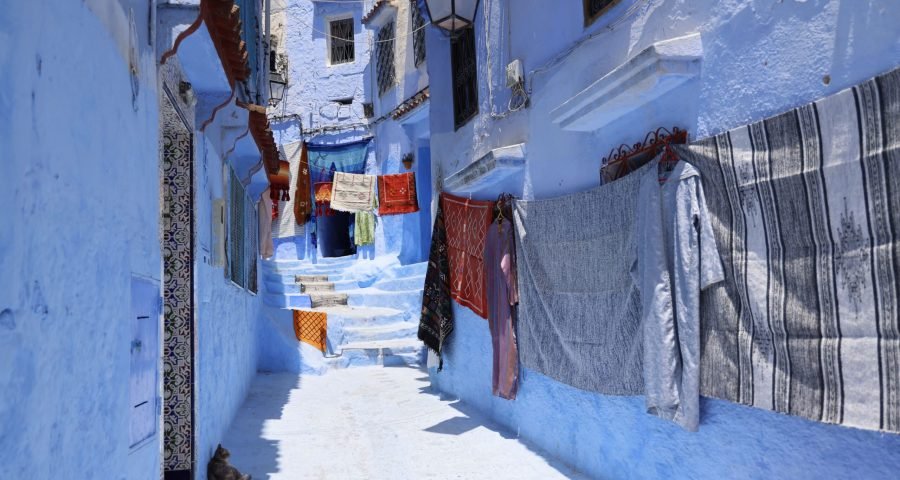
Chefchaouen's Blue Streets Are Among Morocco's Most Relaxed for Solo Travelers
What to Wear
You don’t need to cover your hair, but modest, loose clothing makes daily life noticeably smoother — here’s what actually works:
- Shoulders & knees covered: loose trousers or a maxi skirt, and a top that covers the shoulders — linen and cotton breathe best in the heat.
- A light scarf: useful for covering your head in mosques and rural villages, or just as a layer against sun and dust.
- Looser rather than fitted: fitted clothing draws more attention in medinas than in resort areas — save it for riad pools and courtyards.
- Comfortable, closed shoes: medina cobblestones and desert camp sand both punish sandals; trainers or light hiking shoes hold up better.
Where to Stay
Where you sleep matters more for solo women than the destination itself — a well-reviewed riad beats a budget hotel almost every time:
- Riads over anonymous hotels: a family-run riad usually means staff who know you're alone, watch out for you, and can call you a trusted taxi at any hour.
- Read recent reviews from women specifically: look for mentions of the walk from the nearest gate or taxi drop-off, not just the room itself.
- Ask for a room away from street-facing windows on the ground floor, and confirm check-in is possible after dark before booking a late arrival.
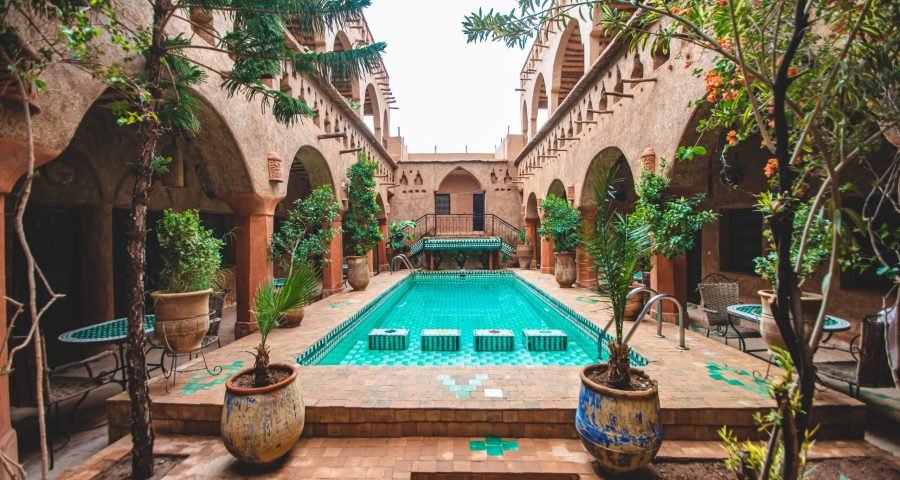
A Well-Reviewed Riad Is Often Your Safest, Most Welcoming Base
Getting Around Safely
Transport is where most solo travelers feel the most uncertain — a few habits make it straightforward:
- Petit taxis are metered and cheap for trips within a city — insist on the meter, or agree a price before getting in if it's broken.
- Trains (ONCF) between major cities are comfortable and safe, with a reserved first-class option worth the small extra cost for overnight or long routes.
- Avoid walking alone late at night outside your riad's immediate neighborhood — arrange a taxi through your accommodation instead, even for a five-minute trip.
- Group desert tours are a good way to travel solo without being alone — shared 4x4s and camps mean built-in company for the Sahara leg of a trip.
Related on Marvels of Morocco: Is Morocco Safe for Tourists? — Riad or Hotel? Where to Stay in Morocco — Morocco Packing List — Prefer a Private Guide? See Our Solo Travel Tours
FAQ
TRAVEL PLANNING
Ready to Plan Your Solo Trip?
Tell us your dates and interests, and we’ll help you build an itinerary — accommodation, drivers, and desert tours included — designed around traveling solo with confidence.